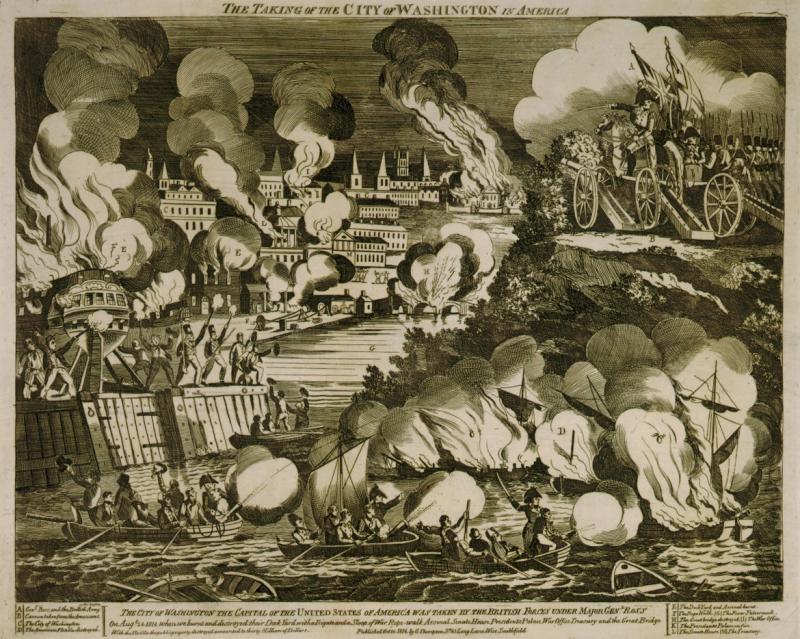
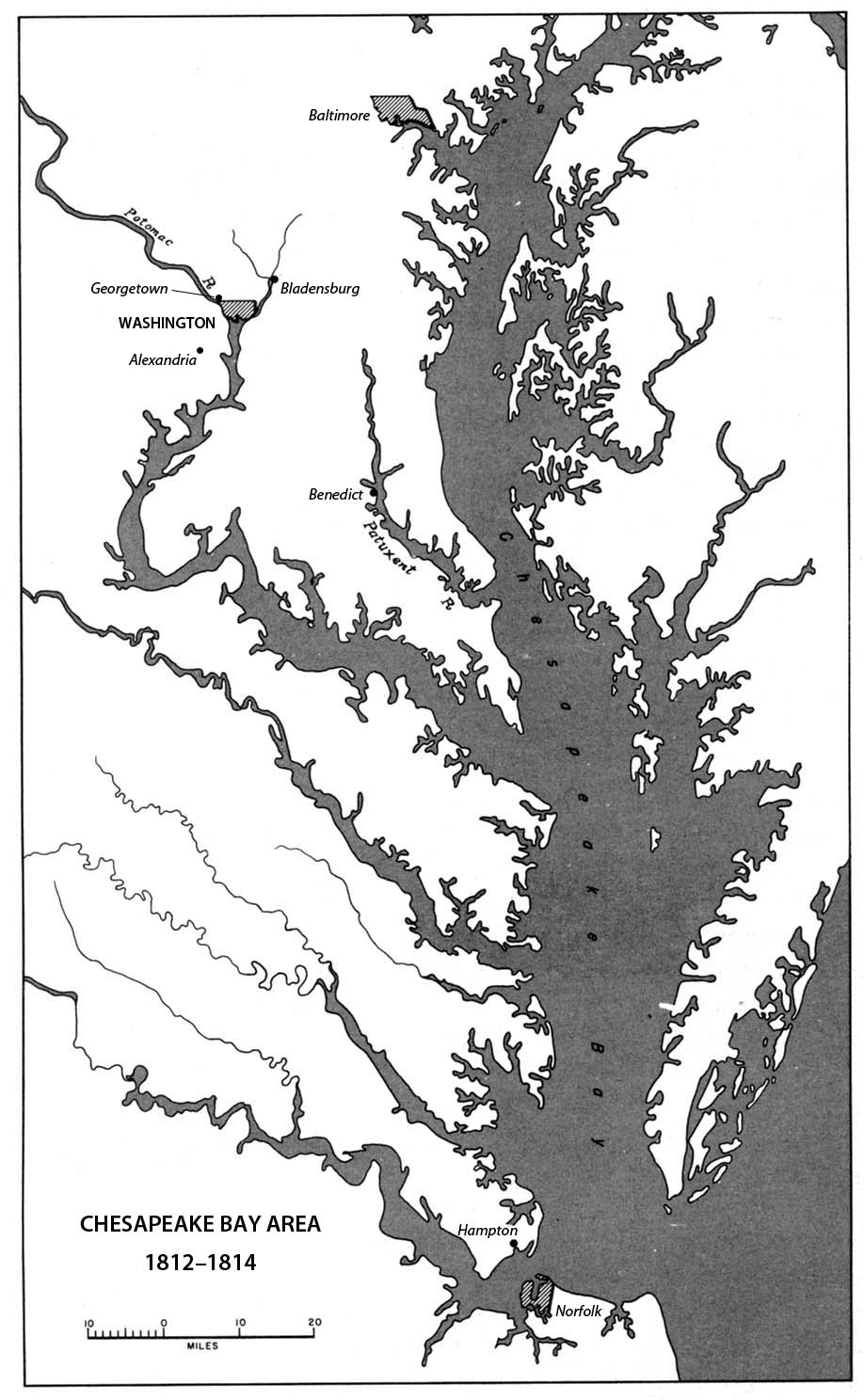
In the summer of 1814, during the War of 1812, British ships sailed into the Chesapeake Bay, easily defeating the American naval ships ordered to stop them. A force of 2,500 British soldiers landed, defeated American militia at the Battle of Bladensburg, Maryland, and on August 24 marched to Washington, D.C. President James Madison fled to Virginia to avoid capture. British troops set fire to the Presidential Mansion (not yet called the "White House"), the Treasury, the building that housed the House of Representatives and the Senate, and other public buildings. The Americans burned the naval yard to prevent ships and supplies from falling into British hands.
A storm arrived that night, and the rain put out most of the fires, saving some of the capital. The British left the city and moved up the Chesapeake towards Baltimore, but they were unable to capture that city.
This brief report appeared in a Raleigh newspaper on September 2, more than a week after the British burned Washington.
Latest of the enemy.
Four days have passed without our receiving any mail North of the Potomac. Newspapers arrive from Alexandria, and very few letters find our way to us from that place or its neighborhood.
Extract of a letter dated Alexandria, August 26, 1814.
This is the first opportunity we have had of writing this week, the office being removed out of town, and the mails stopped. Every public building in Washington is in ashes, and that city and George Town in quiet possession of the British troops. This morning the barracks and the old ships at the navy yard were fired. For two nights our streets have been lighted by the flames at Washington, which is still smoking. Part of the bridge is destroyed. We are momently expecting a visit from them at this place. You can scarcely conceive the distress, alarm and consternation that prevails in that place, women and children are crying and screaming in every direction hurrying out of Town, all bustle and confusion. Stores and houses principally deserted and closed, the specie has been moved and banks closed. A considerable force is ascending the Potomac, and is stated to be with[in] 30 or 40 miles. How long the enemy will remain at Washington God only knows, or what will be our situation in this district. The British commanders have given us assurances that our persons and property shall be respected, or all such as are not found in arms against them. Fort Warburton is evacuated and the guns spiked. Our troops made but a miserable defence — their conduct was disgraceful, and the disgrace to the nation by the destruction of the capital can never be wiped away. It is stated that only 750 of the enemy were engaged.
Admiral Cockburn stated to the deputation from this town that waited on him, that they are in want of flour and should take it, but that they would pay a fair price for it. Another letter from Alexandria, dated August 28, in the same issue of The Star, reported that The War is becoming generally and avowedly odious [hateful in many parts of Virginia. The intolerable burdens which [it] has already imposed upon the farmers, are themes of complaint and execration [curses], even with some of Mr. Madison's warmest friends. Of these burdens, none have been more oppressive, than the frequent military requisitions, which have been made, and are still making in the several counties.]. A battle is thought will take place in a day or two — all is confusion.