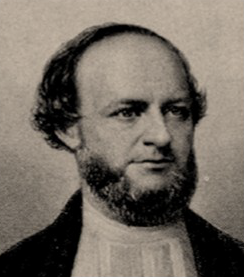
Aldert Smedes was a minister and founder of the St. Mary's Episcopal School in Raleigh, a private boarding school for girls. The school opened its doors in 1842 and continues to operate today. In this sermon, preached to the students at St. Mary's, Smedes describes the duties of a virtuous young girl to her family and to her community as she prepares to take on the responsibilities of a woman.
In his sermon, Smedes encouraged the students to live up to an ideal standard of womanhood known as the "Cult of Domesticity." During the nineteenth century, religious leaders and educators argued that women were naturally pure and virtuous, whereas men were naturally passionate. As such, women had to be protected from the evils of the world by remaining in the home. At home, women would be governed by a loving husband or father who would protect them from the evil advances of other men.
Daughters learned from their mothers how to become an ideal woman. They were taught that sexual purity was the most important quality in a woman. By remaining pure, a woman could help men become more moral and virtuous. Young girls were also taught that a woman's most important duty was to marry a respectable man, have children, and create a happy home. Proponents of the "Cult of Domesticity" believed that a woman would be happy and fulfilled when she took on the duties of a wife and mother.
Educators such as Smedes designed schools where women were taught skills to make them better wives and mothers. Educators argued that women needed to be educated so that they would raise intelligent sons and daughters, and be more interesting companions to their husbands. An educated woman, they reasoned, was also less likely to be manipulated into an illicit affair by a cunning man.
Even in her early youth, what essential aid may an affectionate daughter render to a mother, "cumbered," perhaps, and overburthened with the cares of her household. By her assiduous attentions towards her younger brothers and sisters, by the aid she may give them in their lessons and in their sports, by the gentle supervision and restraint she may exercise over them in the absence of the maternal eye, by the beautiful example she may afford them, of obedience and filial duty, by her sympathy and assistance in their little troubles and sorrows, and by supplying her mother's place in other departments of the household, superintending, or performing, as the case may be, those domestic offices, which only a woman's hand can execute, and on the fulfilment of which, domestic happiness and comfort so much depend, how may a Christian daughter repay the care and pains of which her own childhood was the object -- revive and rejoice the hearts of her parents, when they droop with weariness and anxiety, and almost justify their exulting sentiment, "Many daughters have done virtuously, but thou excellest them all."
But from the peculiar position of a woman at this period of her life, a very serious responsibility is often thrown upon her for the due employment of her time.
The young man is very early apprenticed to the business or profession he is to pursue for a maintenance; and the studies or labors exacted by this preparation, he finds wholesome and constant occupation.
But how often has the young woman many hours of every day at her command -- hours not seldom lost through indolence, frittered away in dress, and vanity or gossip, or, worse than all, consumed in the perusal of works of fiction, generally of a light and enervating, sometimes even of a corrupt and debasing character.
How much in these hours might one, seriously disposed to do what she could, accomplish for her own mental improvement by such reading and studies, as will fit her, not only to sustain well her part in general society, but to discharge, with grace and intelligence, the engrossing duties of her after life, which leave so little time for the pursuits of taste and literature.
In her hours of social intercourse, how much may even a young woman, if she be pious and intelligent, effect, in giving grace and dignity to the one of conversation -- in repressing the effusions of scandal, or the ridicule of serious things; in a word, in rendering virtue and goodness fascinating, by the attractive association in which they are presented. Indeed, I must be permitted here to say, that a high standard of female refinement intelligence and piety, is the best, perhaps the only, security for similar qualities in men.
Let the fop and the profligate -- the unintelligent drudge in business and slave of Mammon, find access to the smiles and esteem of our daughters as the man of approved virtue and cultivated mind and one of the strongest stimulants to industry and self-denial will be removed, by the thoughtless and reckless bestowal of the fairest earthly prize. Surely in this view, a very serious responsibility attaches to early womanhood.
Nor in another social view, is it less burdened. At no period of life, is a woman more at liberty to exercise towards the poor, the ignorant, and the distressed, those offices of love which so well become her sex, and which she can discharge without overstepping the limits of the most shrinking modesty. She must be singularly circumstanced, indeed, who has not, within her own knowledge, some humble pensioner, to whom she can carry a cup of cold water, or a more substantial tribute, while she administers what, often, is more highly valued by the object of her bounty -- the looks and words of sympathy and kindness.
Primary Source Citation:
Smedes, Aldert. "She Hath Done What She Could" or the Duty and Responsibility of Woman; A Sermon, Preaches in the Chapel of St. Mary's School, by the Rector. Raleigh: Seaton Gales, 1851.
Published online by Documenting the American South. University Library, The University of North Carolina at Chapel Hill. https://docsouth.unc.edu/nc/smedesa/menu.html