In the early years of the republic, state governments often advised their representatives in the House of Representatives or Congress how to vote on issues of particular importance. One of these issues of particular importance was The Federal Judiciary Act of 1801, which was passed less than three weeks before the end of John Adam's presidency and a Federalist congressional majority. The act, known colloquially as the "Midnight Judges" Act, reduced the number of judges on the Federal Supreme Court, ended "circuit riding" by judges, created sixteen judgeships and six circuit court districts, and broadened the range of cases that would be heard in Federal Court rather than state courts. All in all, the act gave more power to the Federal Court system and was not well-received by members of the Democratic-Republican Party (Jeffersonian Republicans), who had won the presidential election as well as congressional majority during the election of 1799. Democratic-Republicans felt that a stronger federal judiciary lessened the power of state governments.
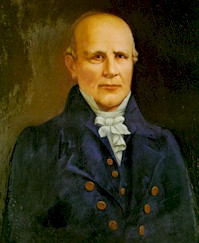
When North Carolina's General Assembly recommended that their representatives vote to repeal the Federal Judiciary Act of 1801, Representatives Archibald Henderson and John Stanly rejected the recommendation of their state legislature regarding judiciary issues, and debates between Federalists and Democratic-Republicans escalated. Below are excerpts from Representative Nathaniel Macon's February 1802 speech before the House of Representatives regarding the Repeal of the Judiciary Act.
Sir, I was astounded when my colleague [Representative Henderson, from Salisbury] said that the judges should hold their offices, whether useful or not, and that their independence was necessary, as he emphatically said, to protect the people against the worst enemies, themselves; their usefulness is the only true test of their necessity, and if there is no use for them they ought not to be continued. I will ask my colleague whether since the year 1783, he has heard any disorder in the State we represent, or whether any act has been done there which can warrant or justify such an opinion, that "it is necessary to have the judges to protect the people from their worst enemies, themselves." I had thought we, the people, formed this government, and might be trusted with it....
Another expression of his equally astonished me; he said that on the 7th day of December a spirit which had spread discord and destruction in other countries, made its entry into this House. What! are we to be told, because at the last election the people thought proper to change some of their representatives and put out some of those who had heretofore been in power, and to put others in power of different opinions, that a destroying spirit entered into all the public functionaries? For what, sir, are elections held, if it be not that the people should change their representatives when they do not like them? And are we to be told from the house-tops that the only use of elections is to promote, not public good, but public mischief?...
Again he says if you repeal the law the rich will oppress the poor. Nothing but too much law can anywhere put in the power of the rich to oppress the poor. Suppose you had no law at all, could the rich oppress the poor? Could they get six, eight or ten per cent for money from the poor without law? If you destroy all law and government can the few oppress the many or will the many oppress the few? But the passing of the bill will neither put it in the power of the rich to oppress the poor, nor the poor to oppress the rich. There will then be law enough in the country to prevent the one from oppressing the other. But while the elective principle remains free, no great danger of lasting oppression, can be really apprehended; as long as this continues the people will know who to trust....
It is asked, will you abolish the mint, that splendid attribute of sovereignty? Yes, sir: I would abolish the mint; that splendid attribute of sovereignty, because it is only a splendid attribute of sovereignty, and nothing else; it is one of those splendid establishments which takes money from our pockets without being of any use to us. In the State that we represent I do not believe there are as many cents in circulation as there are counties. This splendid attribute of sovereignty has not made money more plenty; it has only made more places for spending money.
Source Citation:
Dodd, William E. The Life of Nathaniel Macon. Raleigh, N.C.: Edwards & Broughton, 1903.