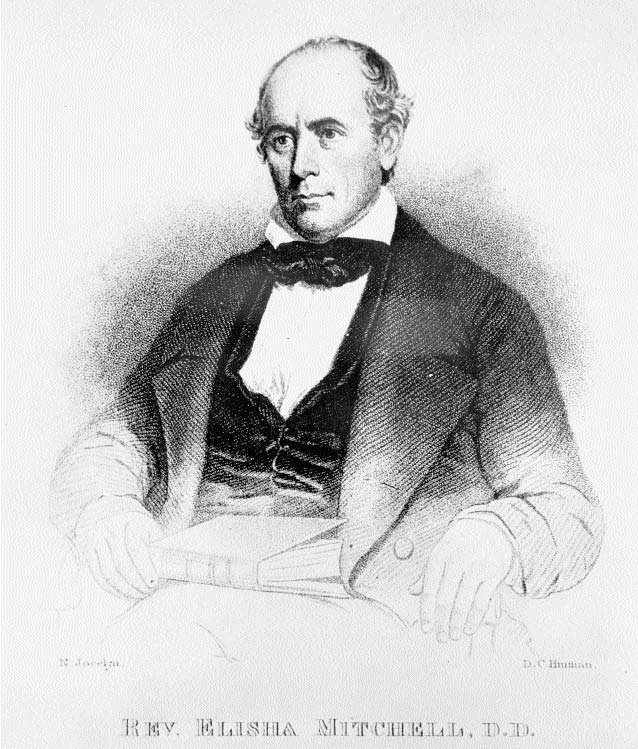
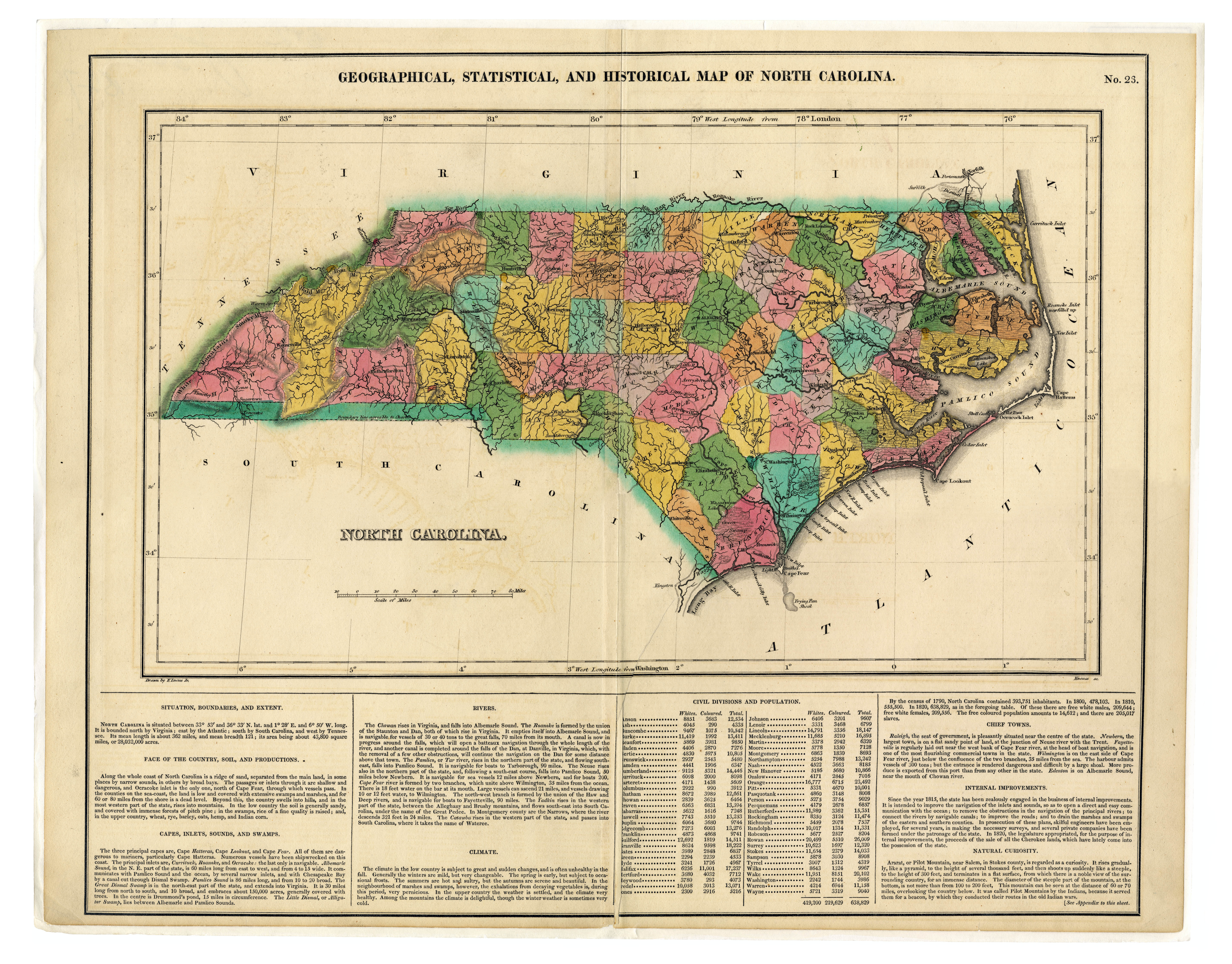
Elisha Mitchell, a professor at the University of North Carolina, traveled often through the Appalachian mountains, exploring and doing research. He wrote this letter to his wife on one of those trips, in the summer of 1828, while staying in Jefferson. The letter tells us a little about his geological research, but it also tells us a great deal about what travel and transportation were like in western North Carolina in the early 1800s.
Jefferson, Saturday Evening.
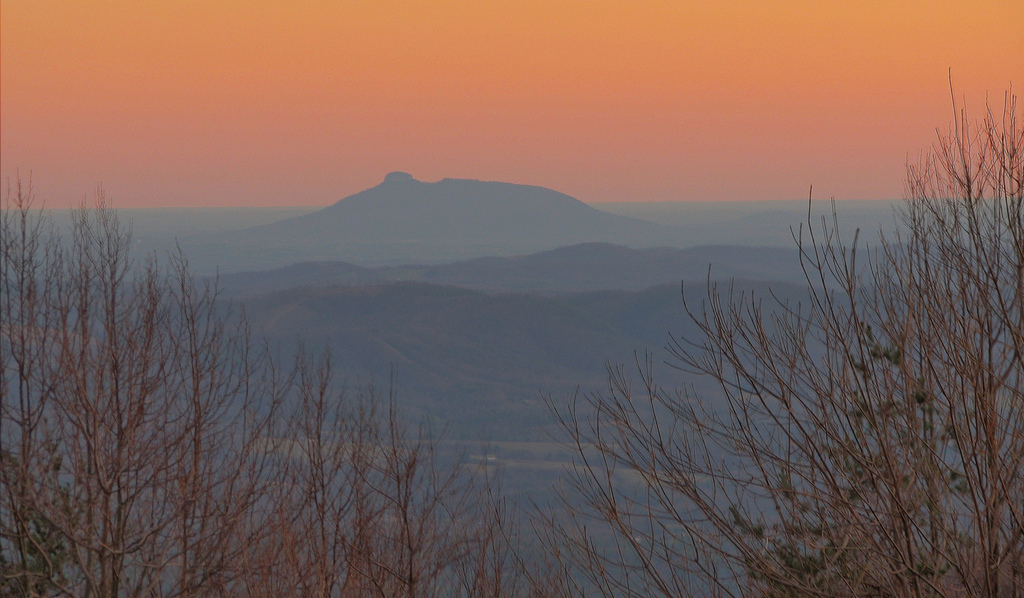
Arrived at this place about noon in safety.... At Mrs. Colvards the fare was rather hard; no tea or coffee but excellent potatoes. I intended to start as soon as it should be light this morning, but the sun had already gilded the mountain tops.... I first clambered up the mountain and a long and dreary clamber it was of five miles. Near the summit there is a very extensive prospect embracing a wide circuit of the comparatively low, level country through which I had been traveling, but there was nevertheless, notwithstanding the extensiveness of the prospect, something wanting. There was no water; there were no thriving towns and villages to be seen, inhabited by an industrious, frugal and virtuous grown population, and a body of youth preparing to supply with ability the plans which their fathers are shortly to leave. The rocks in the ascent of the ridge were chiefly mica slate, and granite of a grain, very white and frequently with abundance of mica. Seven miles from the top of the ridge after a moderate descent — the path apparently over mica slate almost exclusively -- only two or three houses; I came to the New river. 'Tis a beautiful stream, broad but not deep, clear and running its course among the mountains, which often over-hang its banks and overshadow its waters. About three miles from this place left the river. Passed an old Dunker who was mending his mill-race. He evidently is not quite orthodox, poor man; for he shaves around his mouth where the beard would interfere with what he probably considers as amongst the more important duties of his life -- those of kissing his wife and eating his dinner. I am put up at a certain Mr. Lal's -- I beg his pardon, Mr. La's -- no on looking upon the sign I find his name is Faw. Jeffersontown has 6 or 8 houses -- dwelling houses -- rather shabby. Mr. Mitchell is gone out to electioneer at a muster, seven miles according to one informant; 12 to another. I thought at first of getting upon a horse and riding out, but finally gave it out under the idea that the people would be dispersing, if not dispersed, before I should arrive. Instead of doing that I ascended the highest of the mountains in the neighborhood along with Mr. Faw, and a rugged ascent it was. Saw a good many plants that were new to me, dug a root of ginseng for you, a small one with my own hands. The air being clear, the prospect was delightful. The Pilot could be distinguished clearly, probably at the distance of near a hundred miles. It appeared to be almost exactly east. The Grandfather, or the mountain which we supposed to be the one bearing that name, bore S. 40 West. We had a clear view of the country lying down the New River in Virginia, and also of the part of Surry, Wilkes, etc. lying near the Blue Ridge, for the point on which we were standing was high enough to overlook the Blue Ridge. Nearly the whole county of Ashe lay at our feet, the Merry-Anders of the river could be traced as on a map. Some of the plantation in view also presented a noble appearance, but oh, what an ocean of mountains. That spoken of is called the Negro Mountain, the rocks of it are almost hornblende slate, or gneissoid hornblende rock. I have yet seen none of the rock which I supposed from the representation of McClure to underlie the whole county. I start on now today to ascertain if possible when the strata changes, and this leads me to speak of the future. I have been as good a correspondent as possible. This letter will leave here tomorrow morning before it is light and will reach you, as I hope, on Thursday next. I assure you that all is well hitherto, and encourages the hope that it will continue so hereafter. But on Monday I shall probably start on horseback and not be near my writing apparatus for a week, and then perhaps not under circumstances that will permit me to use them. With what you now receive therefore you must rest contented for some time, perhaps till my return, though I will write if I can. I propose as I have already mentioned to start on Monday and travel the northern or lower part of the county and be back to the upper part to be present at a muster next Saturday. The ruggedness of the country renders it necessary I should go on horse-back. In about a fortnight I hope to pass over into Wilkes again and cruise about there and to be home again in five weeks from today. With regard to things at home, push the girls along with their learning -- which I acknowledge you are ready to do. But becoming convinced, as I do, as I travel the country, of the importance of education, I can not help feeling a degree of impatience to have that of my daughters effected as rapidly as possible....
From your Affectionate Husband,
E. MITCHELL.s his work, the places he stayed, and the people he met. Includes historical commentary as well as a contemporary map and a Google map with relevant locations marked.