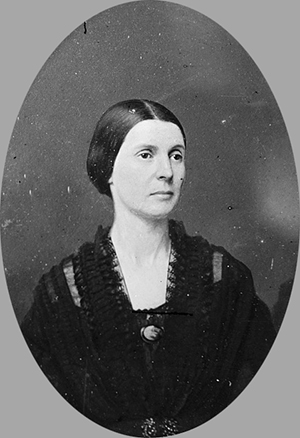
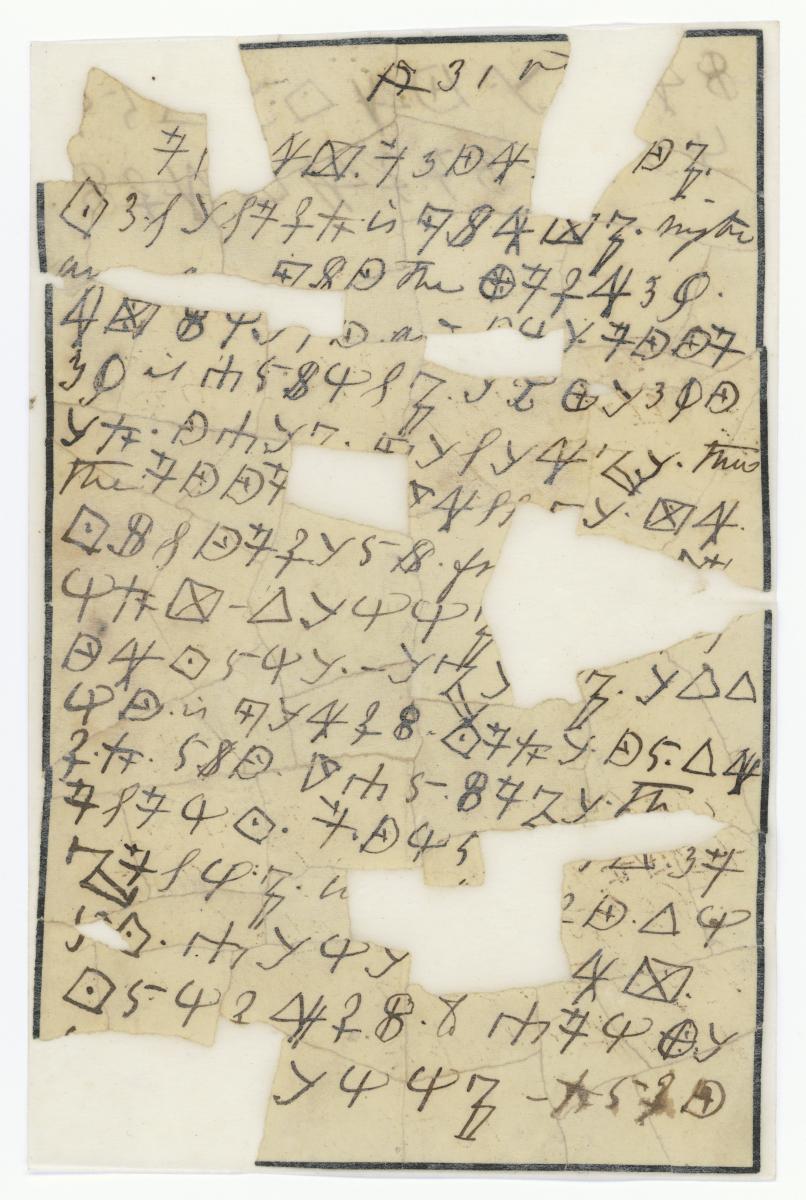
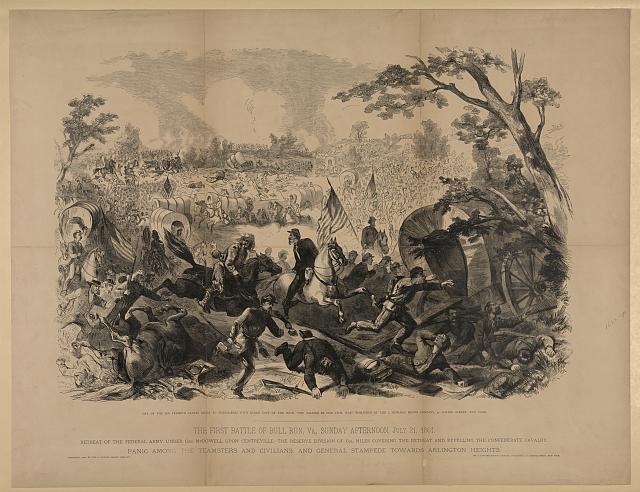
Rose O'Neal Greenhow was a well-connected widow and prominent hostess in Washington, D.C. before aligning herself with the Confederacy and solidifying her legacy as a Confederate spy. "Wild Rose" as she was called from an early age is credited with the Confederate victory at Manassas (also referred to as the First Battle of Bull Run). Below is an excerpt from her book, My Imprisonment and the First Year of Abolition Rule at Washington, discussing her involvement with the battle.
On the morning of the 16th of July, the Government papers at Washington announced that the 'grand army' was in motion, and I learned from a reliable source (having received a copy of the order to M'Dowell) that the order for a forward movement had gone forth. If earth did not tremble surely there was great commotion amongst that class of the genus homo yclept military men. Officers and orderlies on horse were seen flying from place to place; the tramp of armed men was heard on every side - martial music filled the air; in short, a mighty host was marshalling, with all the 'pomp and circumstance of glorious war.' 'On to Richmond!' was the war-cry. The heroes girded on their armour with the enthusiasm of the Crusaders of old, and vowed to flesh their maiden swords in the blood of Beauregard or Lee. And many a knight, inspired by beauty's smiles, swore to lay at the feet of her he loved best the head of Jeff. Davis at least.
Nothing, nothing was wanting to render the gorgeous pageant imposing. So, with drums beating and flying colours, and amidst the shower of flowers thrown by the hands of Yankee maidens, the grand army moved on to the land of Washington, of Jefferson, of Madison, and Monroe; whilst the heartstricken Southerners who remained, did not tear their hair and rend their garments, but prayed on their knees that the God of Battles would award the victory to the just cause.
In fear and trembling they awaited the result - hoping, yet fearing to hope. Time seemed to move on leaden wings. Imagination sounded in their ears the booming cannon, and many a time their hearts died within them at the sickening delay. Few had the hope which filled my own soul, or shared in its exultant certainty of the result. At twelve o'clock on the morning of the 16th of July, I despatched a messenger to Manassas, who arrived there at eight o'clock that night. The answer received by me at mid-day on the 17th will tell the purport of my communication -- 'Yours was received at eight o'clock at night. Let them come: we are ready for them. We rely upon you for precise information. Be particular as to description and destination of forces, quantity of artillery, &c. (Signed) THOS. JORDON, Adjt.-Gen.' On the 17th I despatched another missive to Manassas, for I had learned of the intention of the enemy to cut the Winchester railroad, so as to intercept Johnson, and prevent his reinforcing Beauregard, who had comparatively but a small force under his command at Manassas.
On the night of the 18th, news of a great victory by the Federal troops at Bull Run reached Washington. Throughout the length and breadth of the city it was cried. I heard it in New York on Saturday, 20th, where I had gone for the purpose of embarking a member of my family for California, on the steamer of the 22nd. The accounts were received with frantic rejoicings, and bets were freely taken in support of Mr. Seward's wise saws -- that the rebellion would be crushed out in thirty days. My heart told me that the triumph was premature. Yet, O my God! how miserable I was for the fate of my beloved country, which hung trembling in the balance!
My presentiments were more than justified by the result. On Sunday (21st) the great battle of Manassas was fought, memorable in history as that of Culloden or Waterloo, which ended in the total defeat and rout of the entire 'Grand Army.'
In the world's history such a sight was never witnessed: statesmen, senators, Congress-men, generals, and officers of every grade, soldiers, teamsters -- all rushing in frantic flight, as if pursued by countless demons. For miles the country was thick with ambulances, accoutrements of war, &c. The actual scene beggars all description; so I must in despair relinquish the effort to portray it.
Primary Source Citation:
Greenhow, Rose O'Neal. My Imprisonment and the First Year of Abolition Rule at Washington. London: Richard Bentley, 1863. Published online by Documenting the American South. University Library, The University of North Carolina at Chapel Hill. https://docsouth.unc.edu/fpn/greenhow/menu.html